When your furnace is running but the air coming out feels cold, it’s easy to assume the worst. The good news is that many “no heat” situations are caused by simple issues that you can check yourself. This can save you time, stress, and unnecessary repair calls.
If using this checklist doesn’t solve the problem, Excel Heating & Air Conditioning is here with 24/7 Emergency HVAC Service to get your home in Greenwood and the surrounding areas warm again—fast.
Below is a homeowner-friendly troubleshooting checklist that builds confidence, saves time, and helps you know when it’s time to call in the professionals.
Why Is My Furnace Blowing Cold Air When the Heat Is On?
Before we jump into the step-by-step actions, let’s touch on the most common homeowner question:
Why would a furnace blow cold air when the thermostat is set to heat?
Here are a handful of likely explanations:
- The thermostat settings are incorrect
- The furnace air filter is clogged
- The furnace overheated and tripped its safety limit switch
- The pilot light (on older systems) is out
- The flame sensor is dirty
- A heat pump is defrosting or operating normally in cold weather
The system needs professional repair
The checklist below addresses these scenarios in a clear, easy-to-follow way.
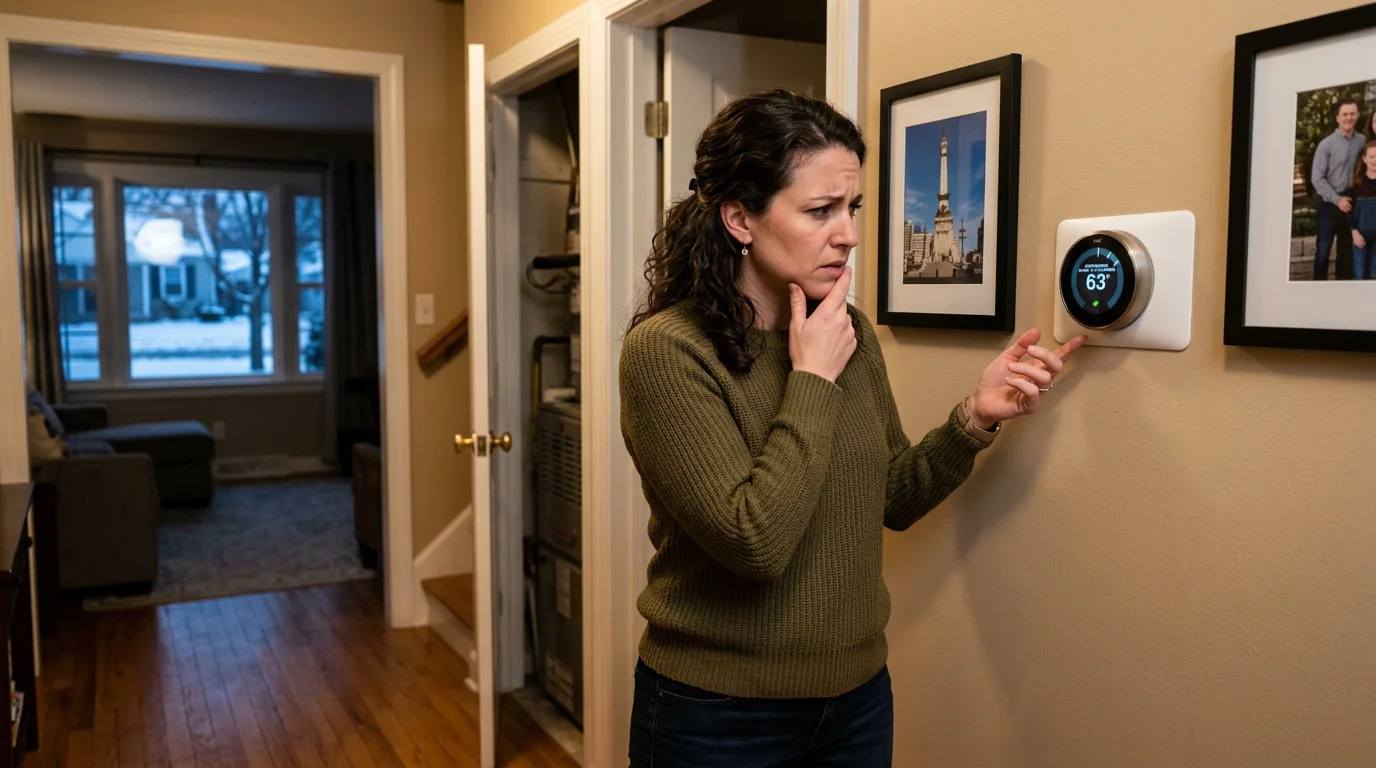
Step 1: Check Your Thermostat (It’s More Common Than You Think)
Thermostat issues are one of the top reasons homeowners experience a furnace blowing cold air.
1. Make sure the thermostat is actually set to “HEAT.”
It sounds obvious—but with multiple people in the home or accidental bumps, thermostats often get switched to Cool, Fan, or Auto.
Set the following:
- System / Mode: HEAT
- Fan: AUTO (Important—ON will run the blower constantly, circulating room-temperature air that feels cold.)
- Temperature: Set at least 3–5 degrees higher than the current room temperature
2. Check the thermostat batteries.
Low or dead batteries can cause:
- The furnace not to start
- Short cycling
- Blower running without heat
If the screen is dim or blank, replace batteries and see if that corrects the problem.
3. Confirm that the schedule or smart-home feature isn’t overriding your settings.
Smart thermostats sometimes default to eco-modes that limit heat.
Try switching to HOLD or Manual to bypass automated schedules.
Step 2: Check Your Furnace Filter (A Dirty Filter Can Cause Cold Air!)
Did you know that a dirty filter will cause a furnace to blow cold air?
A dirty filter restricts airflow, causing your furnace to work harder to pull air through. When airflow becomes too limited, the unit overheats—triggering a vital protection known as the high-limit safety switch.
Understanding the Furnace Safety Switch
Modern furnaces include a safety mechanism that shuts the burners off when the system overheats. If the burners are off but the blower continues to run, the air coming out of the vents feels cold.
This is exactly what happens when:
- The filter is clogged
- Airflow is blocked
- The furnace overheats repeatedly
In short, a dirty filter can absolutely cause a furnace to blow cold air, then shut off.
How to Check Your Filter
- Locate the filter (usually near the return air duct or inside the blower compartment)
- Slide it out and inspect it under light
- If it’s gray, dusty, or difficult to see through—replace it
- Restart your furnace
If your system begins producing warm air within a few minutes, you’ve solved the problem.
Step 3: Check the Pilot Light
If you have an older system (generally one installed before 2010), the problem may be as simple as a pilot light that has gone out.
When the pilot flame is out, the furnace can’t ignite, which results in the blower running with no heat.
Here’s how to check the pilot light if your furnace has one:
- Look for a flame through the small inspection window
- If it’s out, follow the manufacturer’s relighting instructions (usually printed on the furnace door)
- If it goes out repeatedly, the thermocouple or gas valve may need repair
Note: If you ever smell gas, evacuate immediately and call your utility provider—do not attempt to relight the pilot.
Step 4: Inspect the Furnace Safety Switch and Panels
All furnaces include various safety switches that prevent operation when conditions aren’t safe.
You may have tripped a switch if:
- The furnace is blowing cold air then shuts off
- The burners won’t ignite
- The blower runs continuously
Two common safety-related causes:
1. The Furnace Door Panel Isn’t Secure
Furnaces have a door safety switch that prevents operation when the panel is removed.
If you changed a filter recently, you may not have fully latched the door.
Open and close the panel firmly until it clicks.
2. The High-Limit Switch Is Tripped
This can happen due to:
- Dirty filter
- Closed or blocked vents
- Overheating
- Internal malfunction
The high limit switch ensures your furnace doesn’t reach unsafe temperatures.
If the furnace continues overheating after filter replacement, call Excel—this is not a DIY repair.
Step 5: If You Have a Heat Pump, Know What’s “Normal” in Winter
Many homeowners in Johnson County have heat pumps and wonder:
“Why is my heat pump blowing cold air?”
A heat pump does produce cooler-feeling air than a gas furnace, even when it’s working perfectly. This is normal because heat pumps move heat rather than generate it through combustion.
Common causes of “cold air” from a heat pump:
- The system is in Defrost Mode, which generally lasts a few minutes
- Outdoor temperatures are extremely low
- The auxiliary heat hasn’t kicked on
- Air flow around the outside unit is blocked
- Low refrigerant (requires professional service)
The steps above of checking your thermostat and replacing a dirty filter with a clean one are the ways homeowners can try to resolve the problem of a heat pump blowing cold air. You can also check the outdoor unit and clear away snow, plants, and other debris to improve air flow.
If your heat pump seems stuck in cold air mode or is not keeping up, Excel can diagnose whether your system simply needs maintenance or has a performance issue.
Step 6: Try Resetting the Furnace
Sometimes a furnace simply needs a reset to clear a temporary glitch.
How to reset a furnace (general steps):
- Turn the furnace switch OFF (located on or near the unit)
- Wait 30 seconds
- Turn the switch ON again
- Allow the system a few minutes to reboot and cycle
If your issue persists, something deeper is going on.
If You Notice These Signs, Call a Professional Immediately
DIY checks are helpful, but certain problems require an expert. Call Excel if you notice:
- Burning smells or smoke
- Loud booming or grinding noises
- Furnace blows cold air, then shuts off repeatedly
- Frequent limit switch trips
- Heat pump runs constantly but doesn’t warm the home
- Pilot light won’t stay lit
- Furnace won’t turn on at all
These symptoms indicate possible electrical issues, gas flow problems, failing components, or unsafe operating conditions.
When DIY Doesn’t Fix It, Excel Offers 24/7 Emergency Furnace Repair
You don’t have to guess or stress through a cold night. If your furnace still isn’t heating properly, Excel offers 24/7 emergency furnace repair so you can get back to feeling comfortable and safe in your home.
The post Furnace Blowing Cold Air? Here’s Your Troubleshooting Checklist Before Calling for Repair appeared first on Excel Heating and Cooling.