
Every winter in Indiana, the gas or electric bill lands and the same thought follows. There has to be a better way to heat this house.
Here's the straight answer. Angi puts the average geothermal heat pump installation at $15,206, with a typical range of $4,541 to $26,537.
Your price depends on home size, soil, and loop type. The federal tax credit also ended for systems placed in service after December 31, 2025.
When Heating Bills Push You to Look at Geothermal Heating
The first cold bills of the season arrive in November. You open the envelope and wince.
You've heard geothermal cuts those bills. You've also heard it costs a fortune. Both statements sound true, so you don't know which one to trust.
That uncertainty is normal. A geothermal heat pump is a major purchase, and cost figures online vary wildly.
The typical causes of sticker shock are simple. Drilling or trenching for the ground loop costs more than the heat pump itself.
Ignoring the question has a price too. An aging furnace or AC unit keeps burning energy while you wait.
In this article, we'll cover real cost ranges, the tax credit, and how to find help.
How a Geothermal Heat Pump Works
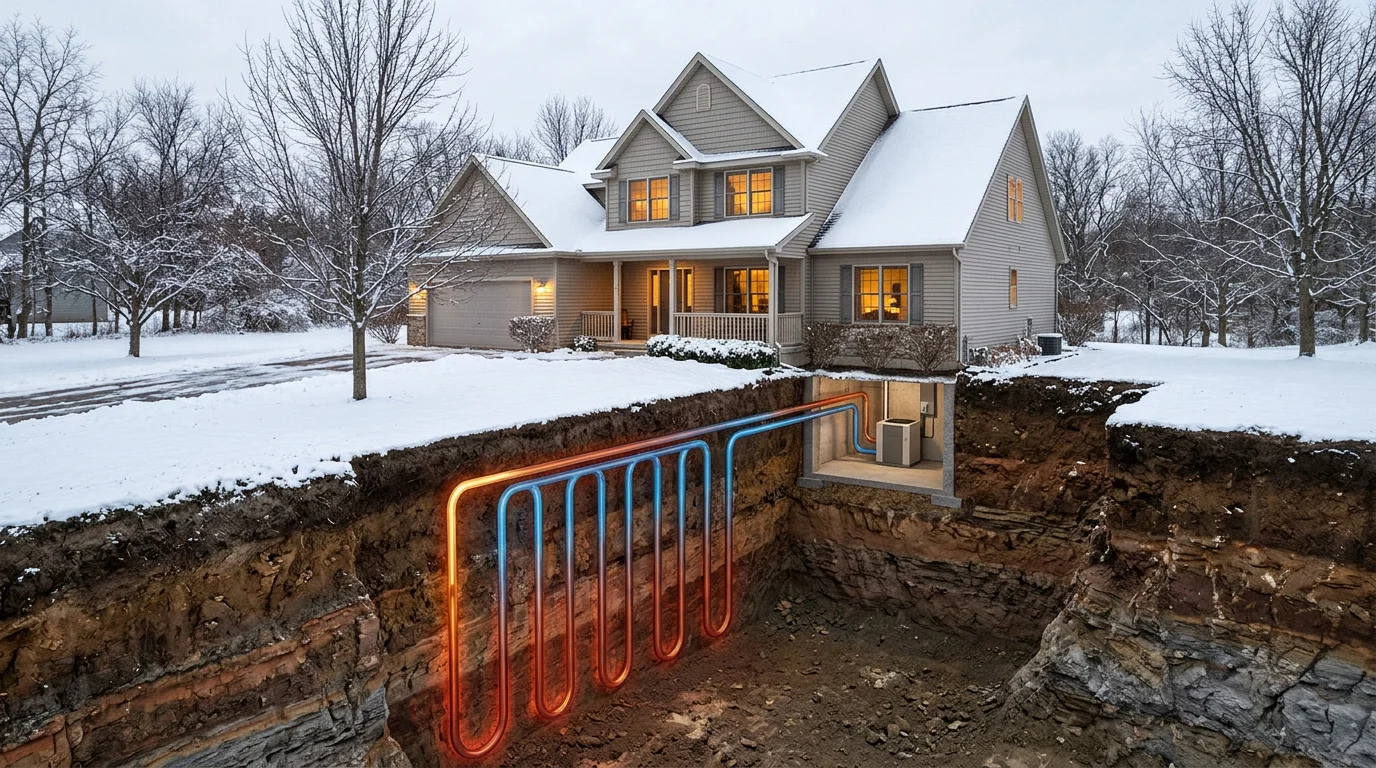
A geothermal heat pump uses the earth as a heat source in winter. In summer, the earth absorbs your home's heat. One system handles both.
The reason it works so well is ground temperature. The U.S. Department of Energy says temperatures about 30 feet down stay relatively constant year-round, between roughly 50 and 59 degrees. Indiana's winter air swings far below that.
A buried loop of pipe carries fluid through the ground. The heat pump moves heat between that fluid and your home.
Here's a common misconception. Many homeowners think geothermal needs hot springs or volcanic activity. It doesn't. Any Indiana yard with enough space for a loop can work.
What a Geothermal Heat Pump Costs in 2026
Cost figures below come from Angi's 2026 geothermal cost data. They're national figures, not Excel quotes.
| Cost measure | Angi's national figure |
|---|---|
| Typical installed range | $4,541 to $26,537 |
| Average installed cost | $15,206 |
| Cost per ton of capacity | $2,500 to $8,000 |
| Yard work (excavation and drilling) | $5,000 to $15,000 |
Angi also reports whole-system averages by loop type. Horizontal loops run $15,000 to $34,000, and vertical loops run $20,000 to $38,000.
Notice the spread. The ground loop is the biggest swing factor in geothermal heating and cooling cost. Vertical loops cost more because they require deep drilling.
What Changes Your Geothermal Price
Four factors move your quote the most. Each one is specific to your property.
- Home size. A larger home needs more tons of capacity.
- Loop type. Horizontal loops need open yard space. Vertical loops fit small lots but cost more.
- Soil and rock. Hard rock makes drilling slower and pricier.
- Ductwork. Existing ducts in good shape keep the project simpler.
An on-site quote is the only way to get a real number. A technician measures your home, checks your yard, and sizes the system.
The Federal Tax Credit Has Ended
This is the biggest change since last year, so read it carefully. The Residential Clean Energy Credit covered 30 percent of qualified costs from 2022 through 2025. The IRS is clear that the credit isn't available for property placed in service after December 31, 2025.
A geothermal system installed in 2026 doesn't qualify. Budget for the full installed cost.
Some older cost guides still show the 30 percent credit. Ignore those numbers. Ask your electric utility whether any current geothermal incentives exist, and confirm details with a tax professional.
Is Geothermal Worth It for Your Home?
Geothermal pays off through lower energy use. ENERGY STAR says certified geothermal heat pumps use 61 percent less energy than a standard model. It also notes that the higher upfront price is recovered through lower energy bills over time.
Angi estimates payback at about 10 years. It also lists a system lifespan of 25 to 50 years. A home you plan to keep for a decade or more fits that math best.
Geothermal is worth considering if:
- You plan to stay in the home for 10 years or longer
- Your yard has room for a loop
- Your current furnace or AC unit is near the end of its life
- You want one system for heating and cooling
If you plan to move in three years, a standard heat pump or high-efficiency furnace is the smarter spend. Be honest about your timeline.
Plan Your Geothermal Project This Winter
Winter is the right time to gather quotes. Planning now means your project can move forward as the ground thaws in spring.
Start with your current equipment. If your AC unit is aging, a pro can help you weigh AC repair against an upgrade.
Get a Straight Answer on Geothermal Costs
Geothermal costs more upfront and saves more over time. The federal credit is gone, so the math stands on its own.
The good news is that guessing is optional. A local HVAC pro can price your actual home and yard.
Excel Heating and Air Conditioning offers geothermal heating and cooling services for homeowners in Greenwood and across central Indiana.
Call Excel Heating and Air Conditioning at (317) 942-3859 to request your geothermal quote. You can also reach the team through the Excel contact page.
Frequently Asked Questions
How much does a geothermal heat pump cost?
Angi's 2026 data shows an average of $15,206 and a typical range of $4,541 to $26,537. The ground loop and home size drive most of the difference.
Is the federal tax credit still available for geothermal?
No. The IRS says the Residential Clean Energy Credit doesn't apply to property placed in service after December 31, 2025. Ask your electric utility about current incentives.
Is geothermal worth it in Indiana?
It pays off for homeowners who stay 10 years or longer. ENERGY STAR says certified models use 61 percent less energy than a standard model.